
Blog
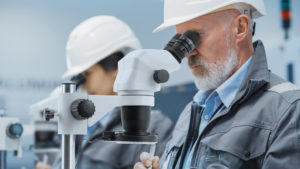
Why High-Resolution Optical Microscopy Continues to Drive Industrial and Scientific Discovery
High-resolution optical microscopy remains essential for industrial inspection, materials science, and applied research. From stereo microscopes that deliver true 3D visualization for precision assembly and electronics rework to metallurgical systems used for materials analysis and quality control, modern optical microscopes provide the clarity needed to make informed decisions. Unitron’s microscopy solutions support technicians, engineers, and researchers with reliable performance across manufacturing and laboratory environments.
Read More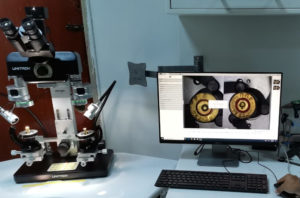
Can Comparative Microscopy Revolutionize Forensic Investigations?
Comparative microscopy is a cornerstone of modern forensic science, especially in firearm and toolmark examination. Learn how forensic comparison microscopes enable side-by-side analysis of bullets and cartridge cases, helping investigators uncover microscopic evidence with clarity, accuracy, and confidence.
Read More
Where Ballistic Evidence Is Born: A Microscopic View of Forensic Ballistics Analysis
Not all ballistic evidence is created in flight. Learn how internal and terminal ballistics produce the microscopic toolmarks forensic scientists rely on—and how modern forensic microscopes help turn small details into decisive answers.
Read More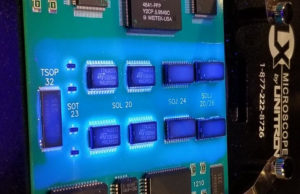
Ensuring Flawless Conformal Coating Inspection with the LX Microscopes by UNITRON 15859-B LED Ring Light
The LX Microscopes by UNITRON 15859-B LED Ring Light is a powerful tool designed to streamline the inspection of conformal coatings in the electronics industry. This dual LED ring light...
Read More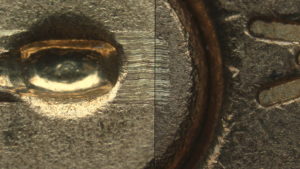
A Review of Forensic Microscopes
Microscopes are widely use in forensic science. Learn about the most common and iconic types of microscopes in use today.
Read More
METRICAL Overview
METRICAL is UNITRON's modular quantitative image analysis software that is designed specifically for metallurgical and materials science research and quality applications. Click below to watch this brief overview of the...
Read More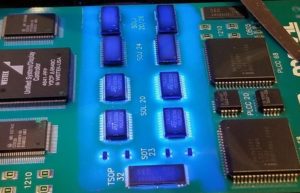
Why Use a UV Ring Light?
When should you use white vs UV ring lights during electronics inspection? Read to find out.
Read More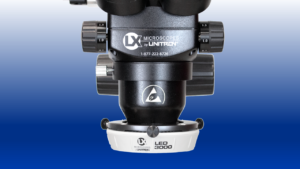
5 Reasons Why the LED-3000 is at the Top of the Ring Light List
Proper illumination of a sample is nearly as important as magnification and optics when using a stereo microscope. Production, assembly, rework, inspection and quality control environments demand a ring light...
Read More
Understanding the Importance of ESD in Electronics Manufacturing
Ho do you prevent ESD in electronics manufacturing? Common questions are answered.
Read More
Why LX Microscopes by UNITRON?
Previously known as LUXO Microscopes by UNITRON, LX Microscopes by UNITRON® are designed to withstand the rigors of production and inspection environments. With 40-years’ experience delivering a complete line of...
Read More
LX Microscopes by UNITRON® -- A 3-Year-Old Name with a 40-Year-Old History
The LX Microscopes by UNITRON brand (formerly LUXO Microscopes) has a 40-year history of delivering robust, dependable microscopes with superb quality. Rebranded as LX Microscopes by UNITRON 3 years ago...
Read More
The Case of the Lindbergh Kidnapping: How a Microscope Changed the Course of a National Investigation
The Lindbergh kidnapping is an important moment in history for crime-solving. Discover how the use of microscopes enhanced forensics during this case.
Read More
How Forensic Teams Are Solving Crimes with the Help of Microscopic Algae
Microscopic algae are important pieces of evidence for investigations. Find out why forensic scientists look at diatoms and what these algae reveal about a crime.
Read More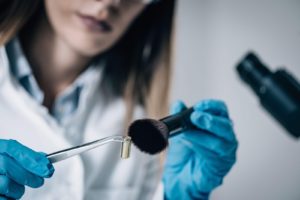
Forensic Ballistics: Changing the Way Gun Crimes Are Solved
Technological advancements in forensic ballistics are transforming criminal investigations. Learn about these different ways ballistics is improving.
Read More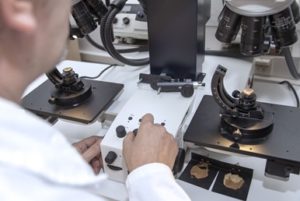
An Introduction to the Comparison Forensic Microscope
The comparison microscope has become a crucial tool in the field of forensic science. These microscopes are the ideal tool to use when comparing samples or specimens side-by-side, simultaneously. Once considered only a trend in forensic fields such as ballistics, the comparison microscope has become a foundational element in forensic examinations worldwide. Continue reading
Read More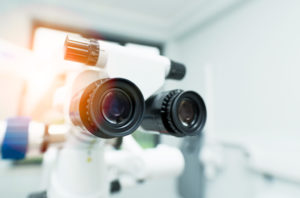
How to Select the Right Digital Camera for Your Microscope
Sharing what you see under a microscope used to mean having someone else physically look into the instrument you were using. Today, digital cameras for microscopes make it easier than ever to share images with your students, colleagues, other professionals in your field, or anyone around the world. Continue reading
Read More
Optical vs. Digital Microscopes: Which Is Better for Your Application?
Both digital and optical, or traditional, microscopes have made significant advancements in the past 50 years. At UNITRON, we recognize that there is a need for both types of microscopes...
Read More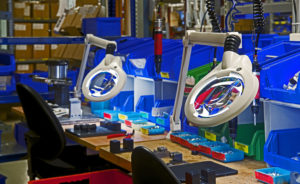
Back to Basics: Illuminated Magnifiers
Today’s illuminated magnifiers offer an extensive array of features and functionalities to suit individual preferences, ergonomic concerns, and an ever-expanding range of working conditions and applications. While users appreciate the...
Read More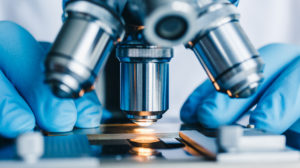
How Are Microscopes Used in Forensic Science?
Sometimes referred to as "criminalistics," forensic science is the application of science in criminal and civil investigations. Of course, forensic science demands precision, and the microscope is an essential piece of equipment for researchers in all of its different fields. Here are some specific ways that forensic science microscopes help medical experts, law enforcement agencies, and researchers conduct their vital work: Continue reading
Read More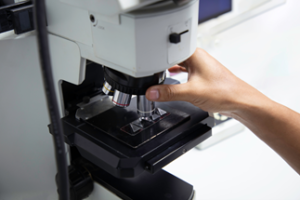
What Is Metallography, and Why is it Important?
You may not have heard of metallography, but if you’ve used a phone, been on a plane, or rode in a car, you have benefitted from its existence. Metallography is defined as “the study of the atomic and chemical structure of all types of metallic alloys using microscopy.” It traces its roots back to 19th-century British scientist Henry Clifton Sorby, but advances in technology have helped it maintain relevance and led to new discoveries about the properties of metals.
Continue reading Read More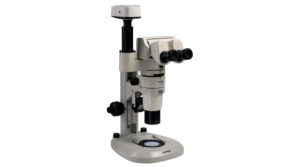
Benefits of Stereo Microscopes With Digital Cameras
It can be difficult to keep one eye closed while looking through a microscope eyepiece with the other eye. A stereo microscope eliminates the need to close one of your...
Read More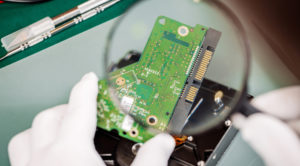
What's Next for Visual and Optical Inspection?
Authors: Mark Clymer1, Kieran Slicker2 and Ed Balcerzak1 1UNITRON Ltd., Commack, NY (http://www.unitronusa.com) 2Ash Technologies, Naas, Ireland (http://ash-vision.com) Originally published by Mid-Atlantic Tech Publications, Inc., May 2018: http://us-tech.com/RelId/1966467/ISvars/default/What_s_Next_for_Visual_and_Optical_Inspection_.htm The need...
Read More
What is it about White Balancing?
Remember “the dress?” Was it gold and white or black and blue? The answer comes down to an issue of illumination and white balance. Cameras are “stupid” – even on...
Read More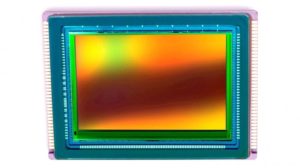
The Deal with Megapixels
Is More Better? As microscopists and also general consumers, consumer (non-scientific) camera manufacturers have tricked us into thinking “more” megapixels translate into better images. NOT TRUE, at least not in...
Read More
Color Cameras in Microscopy
For decades, photographic film was the only option for snapping pictures with microscopes -- prior to that and to the best of their ability, scientists sketched what they saw through...
Read More
Cleaning Microscope Optics
Would you wear dirty eyeglasses or sunglasses? Just like these, microscope optics work better when they are free of dust and smears. Grime on your optics reduce the resolution, create...
Read More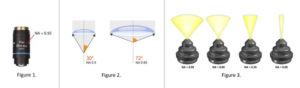
Demystifying Numerical Aperture
We are often asked to recommend the appropriate objectives for a microscope. The objective sits closest to the specimen, is an integral component of the microscope and is crucial to...
Read More
 © 2018 UNITRON® All rights reserved.