
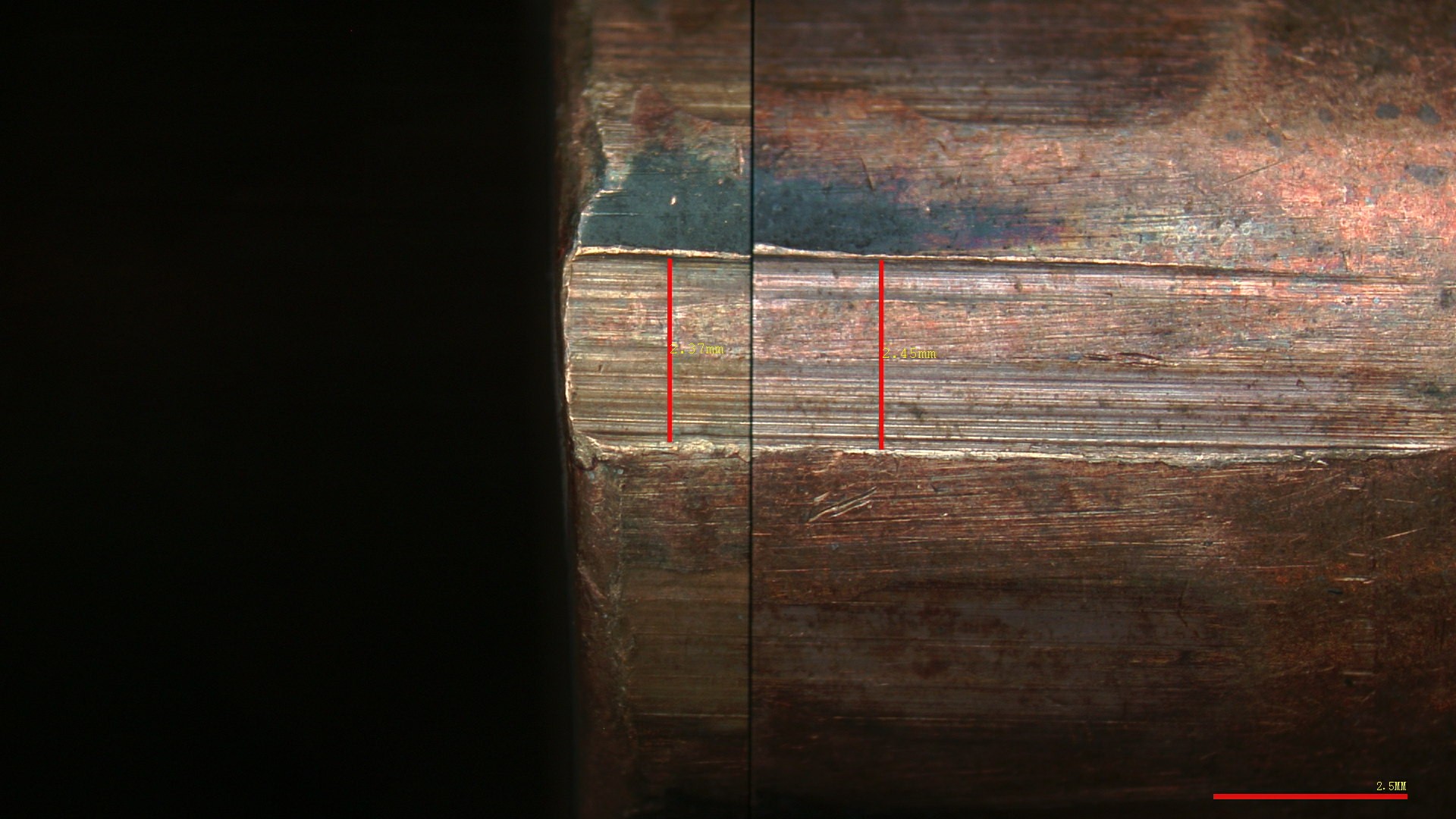
In forensic science, the most compelling ballistic evidence often forms long before a bullet ever reaches its target. While popular depictions of forensic ballistics tend to focus on bullet trajectories and flight paths, the most definitive clues are created inside the firearm itself—etched into metal surfaces in fractions of a second. These microscopic toolmarks tell a story that can link a cartridge case or bullet to a specific firearm with remarkable certainty.
Ballistics is often described as the study of a bullet’s journey, but for forensic investigators and firearm examiners, the most critical work begins at the moment a trigger is pulled. Understanding where and how ballistic evidence is generated—and which phases preserve examinable detail—is essential to accurate firearm identification and courtroom-ready conclusions.
The Three Phases of Forensic Ballistics—Revisited
Forensic ballistics analysis is traditionally divided into three phases: internal ballistics, external ballistics, and terminal ballistics. While each phase contributes to reconstructing a shooting incident, not all phases generate physical evidence suitable for microscopic examination.
Internal Ballistics: Where Firearm and Toolmark Evidence Is Created
Internal ballistics examines what happens inside the firearm from ignition until the projectile exits the barrel. This brief but intense phase is where the most critical firearm and toolmark evidence is formed.
As the cartridge is fired, interaction between the firearm and ammunition produces distinctive toolmarks, including firing pin impressions, breech face marks, chamber markings, extractor and ejector marks, and barrel striations. These features serve as mechanical signatures shaped by manufacturing processes, wear, and use—often unique to a specific firearm.
Forensic scientists rely on comparison forensic microscopes to analyze this evidence during firearm and toolmark examination. By viewing two specimens simultaneously under matched optical conditions, examiners can evaluate microscopic similarities and differences with clarity and confidence. Unitron’s forensic comparison microscopes are engineered specifically for ballistic, firearm, and toolmark analysis, supporting precise side-by-side comparisons that are central to reliable identification and expert testimony.
Stereo microscopes also play a critical role in internal ballistics analysis. Their three-dimensional visualization and wide field of view make them ideal for initial evidence screening, orientation, and examination of surface topography before detailed microscopic comparison begins.
External Ballistics: Trajectory Analysis and Scene Reconstruction
Once a bullet exits the firearm, it enters the realm of external ballistics. This phase focuses on the projectile’s movement through the air, influenced by gravity, distance, and environmental conditions. External ballistics supports trajectory reconstruction and crime scene analysis, helping investigators determine shooter position and bullet path.
Because external ballistics does not involve sustained contact with solid surfaces, it produces little physical evidence for laboratory microscopy. As a result, this phase relies more on measurements, calculations, and modeling than on microscopic comparison.
Terminal Ballistics: Microscopic Examination After Impact
Terminal ballistics begins when a bullet strikes its target. While impact can deform or fragment a projectile, it may also preserve portions of the striations and surface features imparted during internal ballistics.
Recovered bullets and fragments are frequently examined using stereo microscopes and digital microscopes to assess deformation patterns, material transfer, and remaining toolmarks. Digital microscope systems—such as Unitron’s microFOCUS 4K and enVision AF—support high-resolution imaging, measurement, and documentation, allowing forensic scientists to capture detailed visual records and share findings efficiently. In some cases, sufficient identifying detail remains to support further comparison, extending ballistic evidence analysis into this final phase.
Microscopes Used in Forensic Ballistics and Firearm Examination
Modern firearm and toolmark examination depends on selecting the right microscope for each analytical task. Comparison forensic microscopes form the foundation of ballistic identification, enabling precise, simultaneous comparisons of bullets and cartridge cases. Stereo microscopes provide essential three-dimensional context for evidence handling and surface evaluation, while digital microscopes enhance documentation, measurement, and presentation with ergonomic and workflow advantages.
Together, these microscopy solutions support accurate forensic ballistics analysis, from initial evidence screening through final courtroom presentation.
Precision Today, Confidence Tomorrow
As forensic science continues to evolve, new technologies enhance ballistic investigations, but the fundamentals remain unchanged: identifying marks created through mechanical interaction and examining them with clarity and consistency. Advances such as artificial intelligence and digital workflows build upon the same microscopic evidence formed during internal and terminal ballistics.
In forensic ballistics, truth is often measured in microns. By focusing on the phases where ballistic evidence is physically created and preserved—and by using purpose-built tools like Unitron’s comparison, stereo, and digital microscopes—investigators can transform minute details into decisive answers. Precision instruments and careful analysis don’t just support investigations—they strengthen the pursuit of justice, one comparison at a time.